


Helping young Tasmanians play it smart
November 10, 2026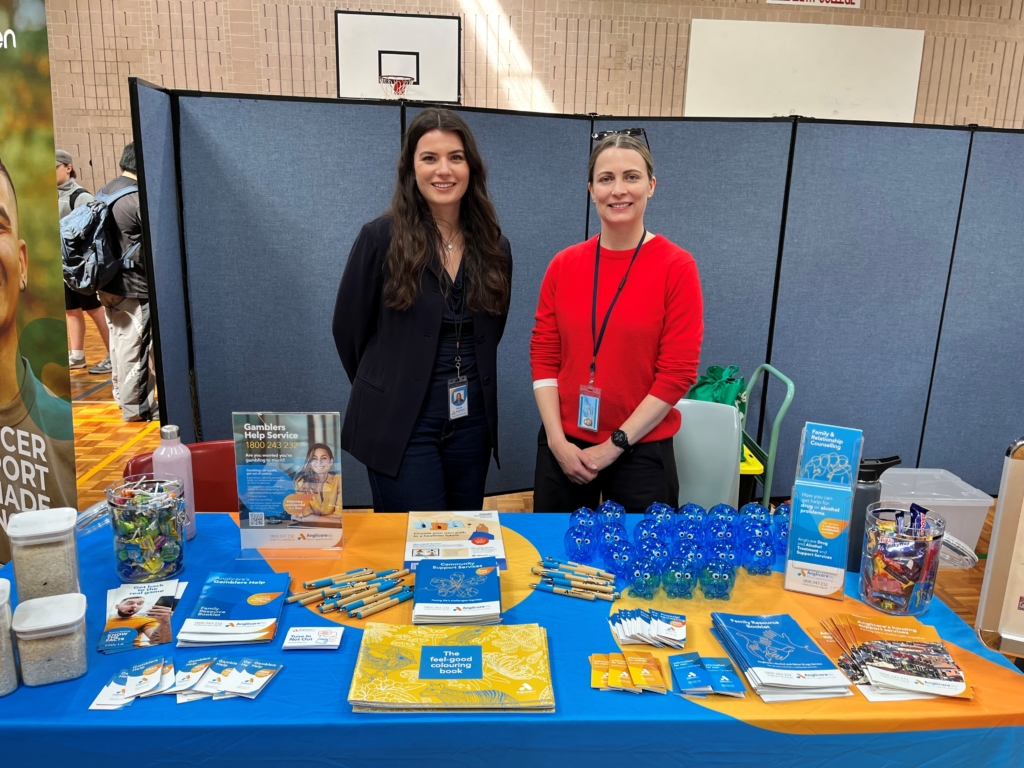
Anglicare’s Gamblers Help team is educating young people about the fine line that exists between gaming and gambling.
Members of Anglicare Tasmania’s Gamblers Help team recently attended a series of health and wellbeing expos at local colleges.
“Young people were open in sharing their knowledge and experience about gaming and gambling activities,” said Gamblers Help practitioner, Dimity.
“Most of the young people we spoke to were surprised to learn about the extent of gambling harm in Australia, including annual gambling losses exceeding $32 billion and Australia’s position as one of the world’s highest gambling-loss countries.
“The conversations we had with students were really productive, focusing on recognising warning signs, knowing where to seek support, and how to assist friends or family members who may have concerns.”
Dimity said separate conversations with school health nurses and teachers highlighted their growing awareness of young people experiencing harm from both gaming and gambling.
“Nurses reported an increase in school refusal linked to gaming addiction, and teachers are noting instances of students gambling on apps during school hours,” she said.
“These insights reinforce the importance of early education, awareness, and prevention efforts to support the wellbeing of young people and their families.”
Loot boxes risk harm
More than 300 people, including community sector professionals, educators, parents and carers registered to hear about the risks of gambling-related harm in popular video games at an Anglicare webinar, The Gamblification of Gaming, in September.
Participants heard from University of Tasmania Associate Professors Jim Sauer and Aaron Drummond about the popularity of gaming: of the 2.4 billion gamers world-wide, 224 million are under the age of 18.
They discussed the prevalence of gambling-like features such as loot boxes, which are digital containers of random items that are purchased with real money.
Professor Sauer described loot boxes as a common and lucrative monetisation method designed to keep players engaged and rewarded on a seemingly random basis, which in turn encourages them to spend what they cannot afford.
Recognising the warning signs
Linda, an educator with Anglicare’s Gamblers Help team in Burnie, shared the early warning signs that a young person in your life could be developing addictive behaviours. These could include:
- gaming during school hours
- skipping meals and self-care routines
- a loss of interest in hobbies and general motivation to do things
- conflict in relationships
- borrowing money
- transitioning to gambling, including sports betting.
“Gamblers Help is a safe space for parents and carers,” Linda says.
“We explore what’s driving problem behaviours and how you can support your young person with empathy, respect and patience – this is the key to positive change.”
PIC: Gamblers Help practitioners with Anglicare Tasmania, Dimity (left) and Gabrielle, shared information about gambling harm at a health and wellbeing expo at Elizabeth College in Hobart.
More information
Gamblers Help
Anglicare Tasmania operates the Tasmanian Government’s Gamblers Help service across Tasmania. Our practitioners are friendly professionals, and their support is free and confidential. Contact Gamblers Help on 1800 243 232.